A Foreign Buyer’s Guide to Amsterdam Mortgage Approval Steps in 2026
Reading time: 9 minutes
Table of Contents
- Why Amsterdam Mortgages Feel Different for Foreigners
- The Core Approval Roadmap
- Documentation Non-Negotiables
- Common Roadblocks (and How to Dodge Them)
- Lender Comparison: What Actually Moves the Needle
- NHG, Interest Rates, and the 2026 Market Snapshot
- FAQs
- Your Next Move: A Practical Checklist
Ever tried explaining your foreign income structure to a Dutch mortgage advisor who’s never seen a payslip like yours? You’re not alone. Amsterdam’s property market has always attracted international buyers, but in 2026, with interest rates stabilizing around 3.8-4.2% for 10-year fixed terms and housing prices in the capital averaging €595,000 for a mid-sized apartment, getting your mortgage approved isn’t just paperwork—it’s strategy.
Here’s the straight talk: Dutch banks aren’t trying to make your life difficult. They’re managing risk in a country with strict lending rules (the Wft and BKR registration systems, for starters). The good news? Once you understand the sequence, foreign buyer mortgage approval becomes predictable, even for people earning income in dollars, pounds, or crypto-adjacent freelance contracts.
Why Amsterdam Mortgages Feel Different for Foreigners
Dutch mortgage underwriting is formula-driven, not relationship-driven. Unlike some countries where a friendly bank manager can bend the rules, Dutch lenders calculate your maximum loan almost entirely through the Nationale Hypotheek Garantie (NHG) guidelines and gross income multipliers set annually by the government. In 2026, the maximum mortgage is generally capped at around 100% of the property’s value, with the loan-to-income ratio hovering near 4.5 to 5 times gross annual salary, depending on interest rate and household composition.
For foreign buyers, three extra layers complicate things:
- Residency and visa status — a 30% ruling expat on a five-year contract looks different to underwriters than someone on a self-employed visa.
- Income verification across borders — foreign payslips, tax returns, and employer letters often need certified translation and sometimes an apostille.
- Credit history gaps — Dutch banks check BKR (the national credit registry), and if you’ve never had Dutch credit, you’re essentially a blank file, which some lenders treat cautiously.
A Quick Scenario
Imagine Sarah, a Canadian UX designer relocating to Amsterdam with a local job offer and the 30% ruling tax benefit. She assumes her Canadian credit score will transfer. It won’t. She starts from zero in the Dutch system, meaning her mortgage advisor recommends a six-month “credit-building” phase—opening a Dutch bank account, getting a local phone contract, and paying rent through direct debit—before even approaching lenders. That’s the kind of practical friction generic guides skip.
The Core Approval Roadmap
Regardless of nationality, everyone follows a similar sequence, but foreign buyers need to front-load certain steps.
1. Get a Mortgage Pre-Approval (Hypotheekoffertecheck)
Before you even view apartments in De Pijp or Amsterdam-Noord, a pre-approval tells you (and sellers) what you can realistically borrow. Dutch real estate moves fast—properties often receive offers within 10 days of listing—so a pre-approval isn’t optional; it’s your entry ticket to serious bidding.
2. Engage an Independent Mortgage Advisor (Hypotheekadviseur)
This is the single most valuable step for foreign buyers. Independent advisors compare offers across 15-20 lenders instead of pushing one bank’s product. Expect advisory fees between €1,500 and €2,800, often negotiable and sometimes tax-deductible.
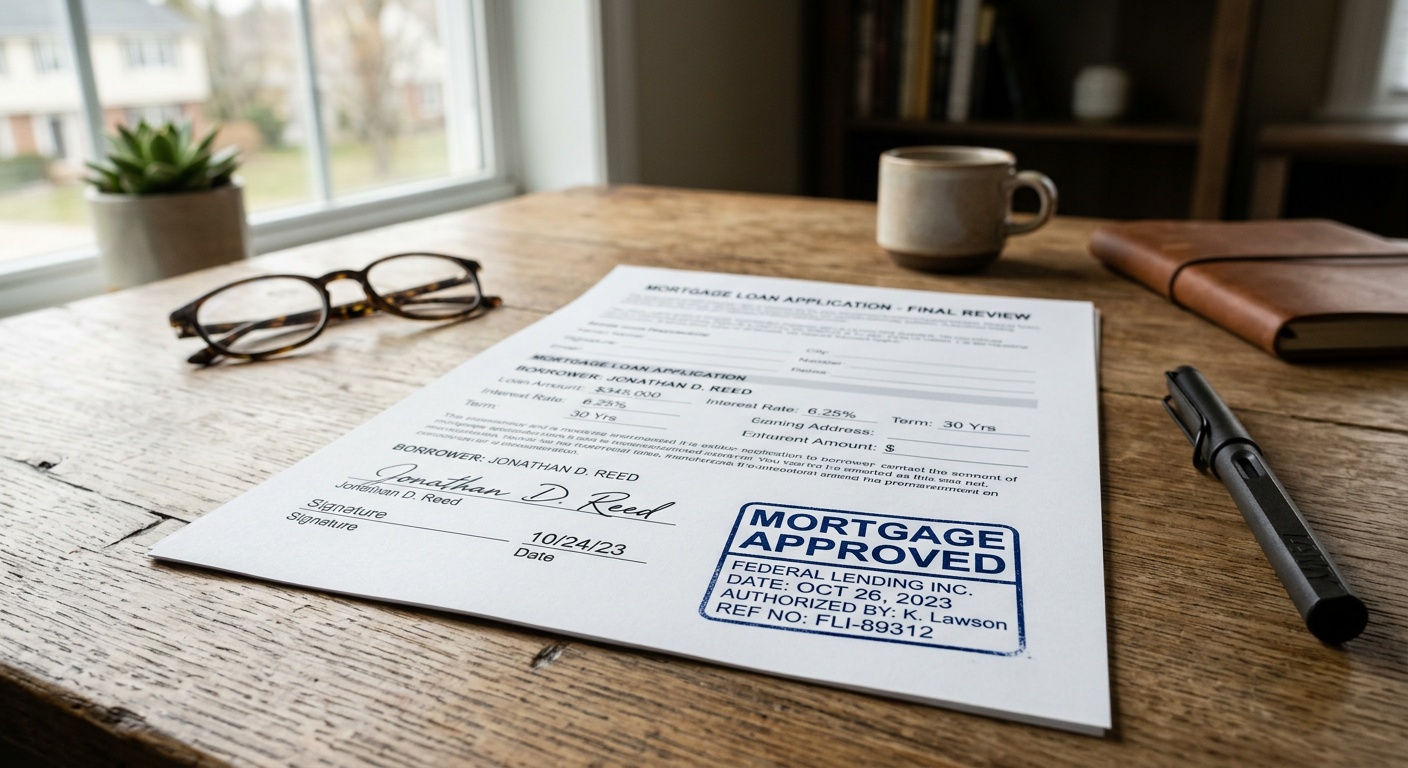
3. Submit Full Documentation
This is where approval speed lives or dies. More on this below.
4. Property Valuation (Taxatierapport)
A certified valuer inspects the property—this typically costs €400-€600 and is required by every lender before final approval.
5. Final Binding Offer and Notary Transfer
Once the bank issues a binding offer, you sign at a notary (notaris), who also handles the land registry transfer. This final stage usually takes 4-6 weeks after conditional approval.
Documentation Non-Negotiables
Foreign buyers consistently underestimate documentation timelines. Here’s what Dutch lenders expect as standard in 2026:
- Valid residence permit or EU passport plus BSN (Dutch social security number)
- Employment contract or, for self-employed applicants, three years of audited financial statements
- Last three payslips and an annual income statement (jaaropgave)
- Bank statements showing savings for the down payment (even with 100% financing, buyers need 6-8% for transfer tax and closing costs)
- Proof of existing debts, including foreign loans, translated and disclosed—omitting these is one of the fastest ways to get rejected
Pro Tip
Open a Dutch bank account and get your BSN number registered at the municipality (gemeente) within your first two weeks in the country. Everything else—phone contracts, salary deposits, mortgage applications—depends on that number existing in the system first.
Common Roadblocks (and How to Overcome Them)
Roadblock 1: Self-employment income complexity. Freelancers and business owners face stricter scrutiny. Lenders typically average your last three years of net profit, which penalizes anyone who had a lean year during 2023-2024’s economic slowdown. Solution: work with an advisor who specializes in self-employed mortgages (ondernemershypotheek) and consider NHG-backed products, which have slightly more flexible self-employment criteria.
Roadblock 2: The 30% ruling expiration timeline. If your tax benefit ends before your mortgage term, lenders factor in your post-ruling net income, which can shrink your borrowing capacity significantly. Solution: request an income calculation both with and without the ruling upfront, so there are no surprises at the offer stage.
Roadblock 3: Currency and asset verification delays. Foreign savings accounts, especially in non-EU currencies, require source-of-funds documentation to satisfy anti-money laundering (AML) checks. This can add 2-3 weeks to processing. Solution: consolidate funds into a Dutch or EU account at least six weeks before applying.
Lender Comparison: What Actually Moves the Needle
| Lender Type | Avg. Approval Time | Foreign Income Flexibility | Typical Rate (10-yr fixed, 2026) | NHG Eligible |
|---|---|---|---|---|
| Major Dutch Bank (ABN, ING, Rabobank) | 4-6 weeks | Moderate | 3.9% | Yes |
| Direct Lender (e.g. Munt, Attens) | 3-5 weeks | Low-Moderate | 3.8% | Yes |
| International/Private Bank | 6-9 weeks | High | 4.3% | No |
| Mortgage Fund/Pension Provider | 5-7 weeks | Moderate | 4.0% | Sometimes |
NHG, Interest Rates, and the 2026 Market Snapshot
The NHG guarantee cap in 2026 sits at €450,000, meaning most Amsterdam apartments now exceed it, especially in central districts. Buyers above that threshold lose access to NHG’s lower rates and risk protections, which is worth factoring into your budget planning early rather than discovering it mid-negotiation.
According to Dutch housing association Vereniging Eigen Huis, foreign buyers accounted for roughly 11% of Amsterdam mortgage applications in early 2026, up from 8% two years prior—a trend driven by continued relocation of tech and finance professionals to the Zuidas business district.
FAQs
Can non-EU citizens get a mortgage in Amsterdam without permanent residency?
Yes, but it depends on your visa type and employment contract length. Most lenders require at least a one-year renewable work permit and a Dutch employment contract, though some accept self-employed non-EU applicants with three years of verified income history and an established Dutch business registration (KVK number).
How much deposit do foreign buyers actually need in 2026?
While Dutch mortgages can technically cover 100% of the property value, buyers should budget 6-8% of the purchase price for transfer tax, notary fees, valuation costs, and advisor fees—these aren’t financed through the mortgage itself and must come from savings.
Does the 30% ruling affect how much I can borrow?
Yes, significantly. Lenders calculate your borrowing capacity using your net taxable income, so the 30% ruling effectively increases your usable income for mortgage purposes. However, since the ruling’s benefit decreases after five years under current 2026 rules, advisors typically run a dual calculation to ensure long-term affordability.
Your Next Move: A Practical Checklist
Amsterdam’s mortgage system rewards preparation over improvisation, and as international relocation to the city continues climbing in 2026, lenders are only going to tighten documentation standards further, not relax them. Here’s how to stay ahead:
- Register your BSN and open a Dutch bank account within your first two weeks in the country—everything else depends on it.
- Hire an independent mortgage advisor before you start house-hunting, not after you’ve fallen in love with an apartment.
- Request dual income calculations if you’re on the 30% ruling, so your borrowing ceiling reflects reality, not optimism.
- Consolidate foreign savings into an EU account at least six weeks before applying to avoid AML-related delays.
- Get pre-approved before bidding—in a market where homes move within 10 days, hesitation costs you the apartment.
You’ve navigated visas, job offers, maybe even a language you barely speak—the mortgage process is just one more system to decode. So, what’s your first step going to be: opening that Dutch bank account, or finally calling an independent advisor to see what you actually qualify for?