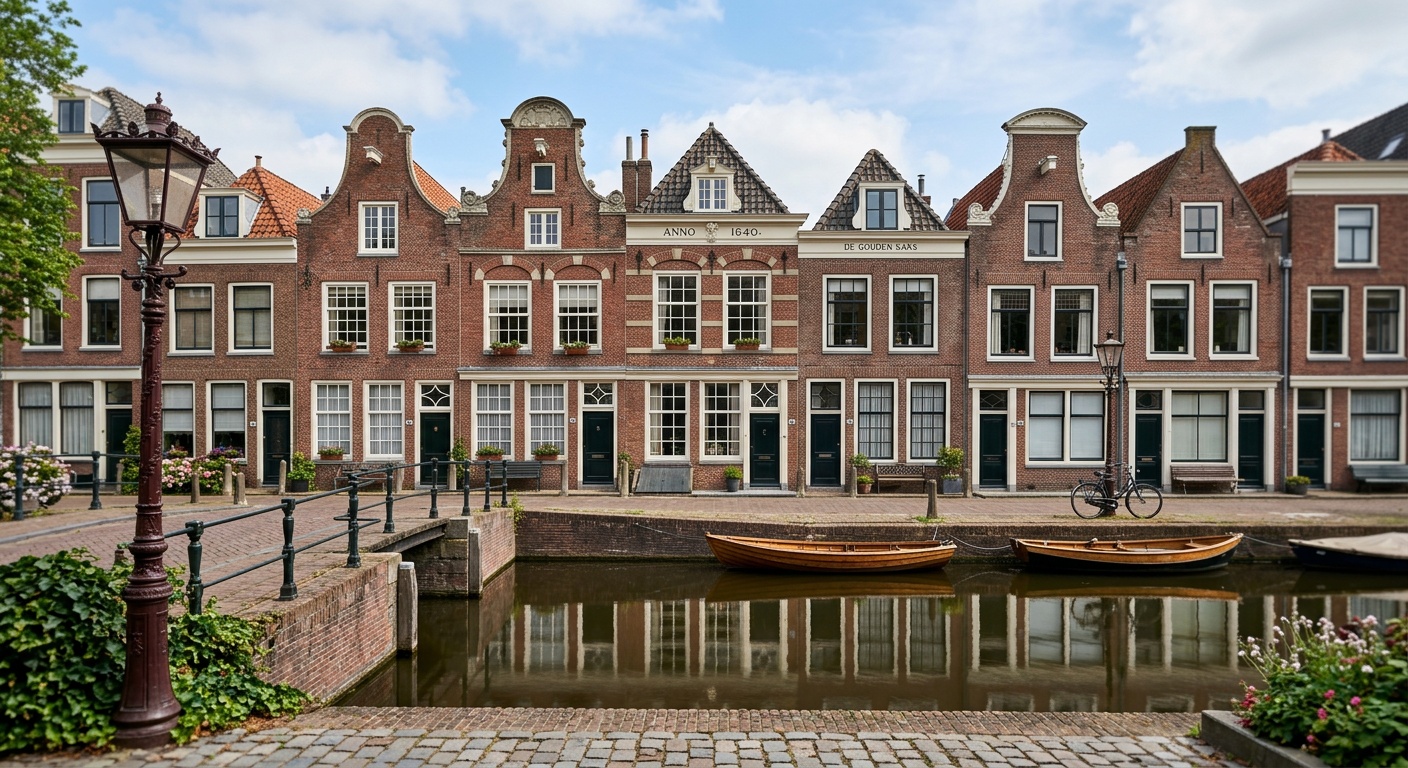
Amsterdam Versus Athens: Comparing Europe’s Foreign Buyer Property Rules
Reading time: 9 minutes
So you’re eyeing a canal-side apartment in Amsterdam or a sun-drenched villa near Athens, and you’re wondering which market actually wants your money. Here’s the twist most buyers don’t expect: these two European Union capitals treat foreign buyers in almost opposite ways. One is quietly closing doors. The other is holding them wide open with a golden handshake.
Let’s unpack exactly what that means for your wallet, your timeline, and your long-term plans.
Table of Contents
- Why Amsterdam and Athens Make an Interesting Comparison
- Amsterdam’s Buyer Restrictions Explained
- Athens and the Greek Golden Visa Advantage
- Side-by-Side: Key Metrics Compared
- Common Challenges Foreign Buyers Face
- Practical Tips Before You Commit
- FAQs
- Your Roadmap Forward
Why Amsterdam and Athens Make an Interesting Comparison
Both cities sit inside the same trading bloc, use overlapping legal frameworks, and attract similar buyer profiles: remote workers, retirees, and investors hedging against inflation. Yet the Dutch and Greek governments have taken dramatically different approaches to housing policy in 2026.
Amsterdam is battling a severe housing shortage—officials estimate a national deficit of over 400,000 homes—and has responded by tightening the screws on outside investment. Athens, meanwhile, is still recovering from a decade-long financial crisis and views foreign capital as a lifeline for its property sector and broader economy.
Well, here’s the straight talk: neither market is “easy,” but the friction points are completely different. Amsterdam gives you bureaucratic caution. Athens gives you incentives wrapped in paperwork. Understanding which type of complexity you’re willing to tolerate is the real starting point.
Amsterdam’s Buyer Restrictions Explained
The Netherlands doesn’t ban foreign ownership outright, but Amsterdam has layered on municipal rules that make casual investment increasingly difficult.
The Self-Occupancy Requirement
Since 2022, Amsterdam has enforced a zelfbewoningsplicht (self-occupancy obligation) on most homes valued below roughly €545,000 (adjusted annually for inflation). This means buyers—domestic or foreign—must live in the property themselves rather than renting it out. By 2026, this threshold has crept closer to €600,000 as the city recalibrates against median prices, but the intent remains unchanged: choke off buy-to-let speculation.
For a non-resident investor hoping to purchase a flat and lease it to tenants, this single rule eliminates a huge slice of the market. You can still buy, but you’d need to actually relocate there or resell to an owner-occupier.
Financing Friction for Non-Residents
Dutch mortgage lenders typically require proof of local income, a BSN (personal tax number), and sometimes Dutch residency history. Non-EU buyers without local employment often face loan-to-value ratios as low as 50-60%, compared to the 80-90% available to Dutch residents. That gap forces many foreign buyers into all-cash purchases, which immediately narrows the realistic buyer pool.
As one Amsterdam-based mortgage broker put it during a 2025 housing panel: “We’re not telling foreigners they can’t buy. We’re telling them they need to bring the entire purchase price in cash, and that changes the conversation completely.”
Athens and the Greek Golden Visa Advantage
Greece has taken the opposite bet. Rather than restricting foreign ownership, it has built an entire residency-by-investment program around it.
Golden Visa Thresholds in 2026
After adjustments in 2025, Greece now requires a minimum property investment of €400,000 in most regions to qualify for the Golden Visa, rising to €800,000 in prime zones like central Athens, Thessaloniki, Mykonos, and Santorini. This tiered system, introduced to cool overheated tourist districts while still welcoming investment elsewhere, has reshaped where buyers are actually shopping.
Unlike Amsterdam’s self-occupancy rule, Greece explicitly permits buy-to-let. Investors can purchase, rent out short- or long-term, and still hold the residency benefit. This is precisely why so many buyers now choose to buy property in greece as a dual-purpose move—rental income plus a legal foothold inside the EU.
Bureaucracy Still Exists, Just Differently Shaped
Greek paperwork isn’t effortless. Buyers need a Greek tax number (AFM), a local bank account, and a notary-verified purchase agreement. Property transfer tax sits at 3.09%, plus notary and legal fees typically totaling another 2-3%. But crucially, there’s no residency requirement to complete the purchase, and no restriction preventing rental income.
Side-by-Side: Key Metrics Compared
| Metric | Amsterdam | Athens |
|---|---|---|
| Buy-to-let allowed for foreigners | Restricted below ~€600,000 | Fully permitted |
| Residency incentive tied to purchase | None | Golden Visa from €400,000 |
| Typical non-resident mortgage LTV | 50-60% | Often cash-based, limited local lending |
| Average purchase-related taxes/fees | Around 8-10% (transfer tax + costs) | Around 5-6% (transfer tax + costs) |
| Time to complete purchase | 2-4 months | 1.5-3 months |
Visualizing the Friction Level
Common Challenges Foreign Buyers Face
Challenge 1: Underestimating occupancy verification in Amsterdam. The city actively checks municipal registration (inschrijving) to confirm you’re genuinely living in the property. Buyers who try to quietly rent out a sub-threshold flat risk fines and forced eviction of tenants. Solution: only pursue buy-to-let above the self-occupancy threshold, or plan on genuinely relocating.
Challenge 2: Currency and financing mismatches in Greece. Non-EU buyers, especially from the UK, US, or UAE, sometimes assume local mortgages will resemble what they get at home. They rarely do. Solution: budget for a substantially cash-heavy purchase and factor in currency conversion timing to avoid losing value during transfer delays.
Challenge 3: Misjudging the Golden Visa zone map. Greece’s tiered pricing means an apartment just outside central Athens might cost half as much and still qualify. Solution: work with a local agent who understands the exact municipal boundaries before falling in love with a listing.
Practical Tips Before You Commit
- Get pre-approved financing clarity early—Amsterdam lenders can take weeks to confirm non-resident terms.
- Verify Golden Visa zone classification directly through Greek immigration authorities, not just listing agents.
- Budget an extra 10% buffer for legal fees, translation costs, and notary charges in both markets.
- Consider dual-purpose investment—Athens property that generates rental yield while building residency rights offers a different risk profile than Amsterdam’s owner-occupier model.
FAQs
Can foreigners still buy property in Amsterdam in 2026?
Yes, but with conditions. Non-residents can purchase freely above the self-occupancy threshold (around €600,000 in 2026), but below that, they generally must live in the home themselves rather than rent it out.
Does buying property in Athens automatically grant EU citizenship?
No. The Golden Visa grants residency rights within Greece and Schengen travel access, not citizenship. Citizenship requires a separate, longer naturalization process involving years of residency.
Which city offers better rental returns for investors?
Athens currently offers stronger rental flexibility and yields, often in the 5-7% range in popular districts, since foreign buyers can freely rent out properties. Amsterdam’s restrictions make pure rental investment far harder to execute legally for non-residents.
Your Roadmap Forward
- Step 1: Define your goal—residency, rental income, or personal relocation—before comparing cities, since the rules serve entirely different buyer intentions.
- Step 2: If cash flow and flexibility matter most, prioritize Athens and confirm your target property sits within a favorable Golden Visa pricing zone.
- Step 3: If you’re planning an actual move to the Netherlands, Amsterdam becomes far more viable since the self-occupancy rule stops being an obstacle.
- Step 4: Line up financing conversations with local lenders in either market at least three months before making an offer.
- Step 5: Work with a bilingual legal advisor familiar with 2026 regulatory updates, since both countries continue adjusting thresholds annually.
The broader trend here reflects a continent wrestling with the same question from different angles: how much should foreign capital shape local housing markets? Amsterdam is choosing protection; Athens is choosing invitation. Where do you fit into that equation, and which trade-off matches the life you’re actually trying to build?