Amsterdam Versus the Mediterranean: Comparing Europe’s Overseas Property Markets
Reading time: 9 minutes
Table of Contents
- Introduction: Two Very Different European Dreams
- Amsterdam’s Canal-Side Premium
- The Mediterranean Alternative
- Head-to-Head: The Numbers That Matter
- Common Challenges (And How to Solve Them)
- Frequently Asked Questions
- Your Roadmap Forward
Introduction: Two Very Different European Dreams
Ever tried explaining to a friend why a one-bedroom canal-house apartment in Amsterdam costs more than a three-bedroom villa with a pool in Puglia? You’re not alone in scratching your head. Europe’s overseas property market in 2026 is a tale of two philosophies: dense, regulated, high-liquidity urban real estate versus sun-soaked, lifestyle-driven coastal investment.
Well, here’s the straight talk: neither market is objectively “better.” They serve different investor goals, different risk appetites, and frankly, different life stages. Some buyers want the stability and rental demand of a capital city where institutional money—including funds structured as a real estate investment trust—competes for the same limited stock. Others want a slower pace, better weather, and a currency of lifestyle that Amsterdam simply can’t offer at any price.
Quick Scenario: Imagine you have €450,000 to invest. In Amsterdam, that barely secures a modest apartment outside the ring road. In Crete, Sicily, or the Peloponnese, that same sum could buy a renovated stone house with sea views and still leave a cushion for furnishings. Which decision actually builds wealth—and which builds happiness? Let’s dig in.
Amsterdam’s Canal-Side Premium
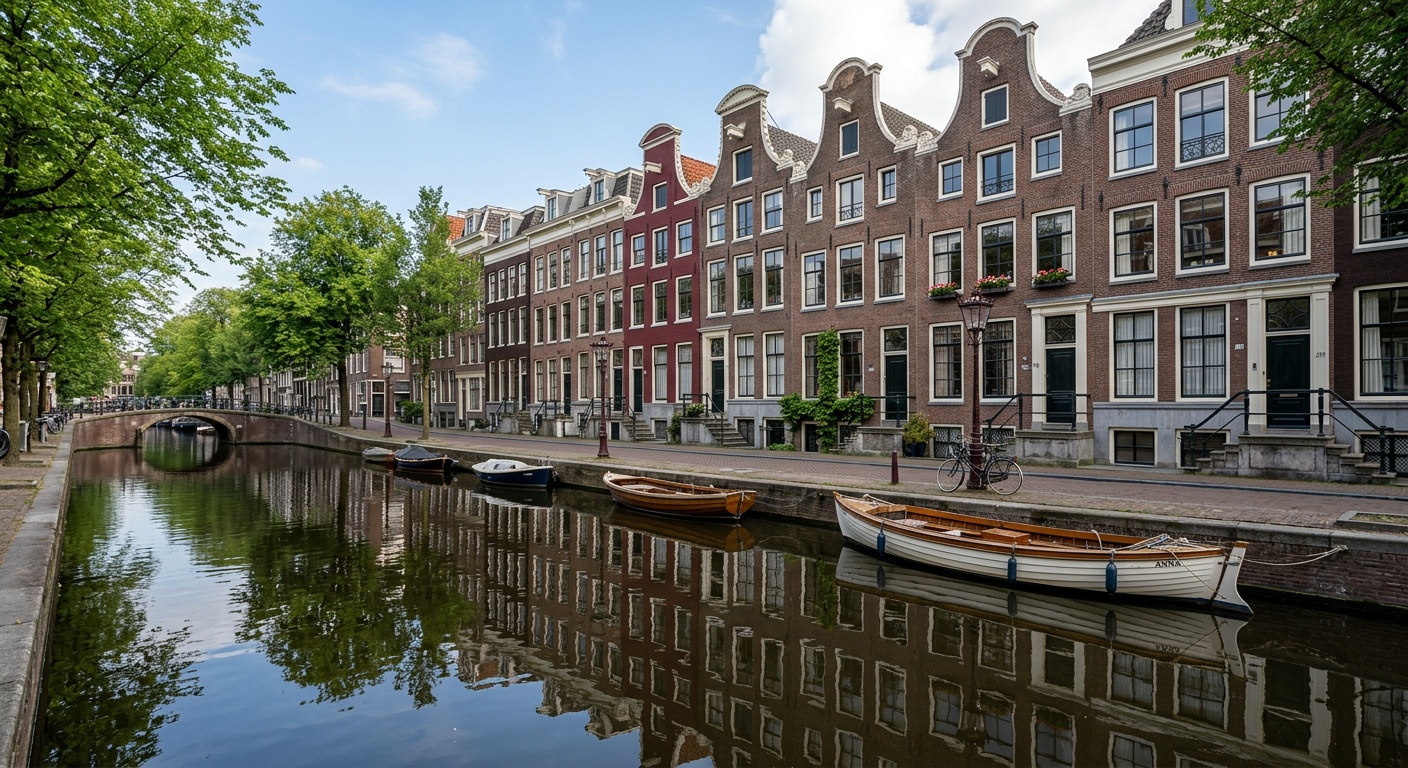
Amsterdam remains one of the tightest housing markets in Western Europe. According to figures released by Dutch estate agents’ association NVM in early 2026, average purchase prices within the city limits hover around €620,000, with prime canal-ring properties routinely exceeding €9,000 per square meter. That’s not a typo—it’s a structural reality driven by a strict building height policy, protected UNESCO heritage zones, and a population that keeps growing faster than permits get approved.
Why Investors Still Queue Up
Despite the eye-watering entry price, Amsterdam offers something the Mediterranean coastline often can’t: near-guaranteed occupancy. The city’s rental vacancy rate sits below 2%, and with the Dutch government tightening short-term rental rules even further in 2026 (many neighborhoods now cap Airbnb-style lets to 30 nights annually), long-term rental yields have become the dominant strategy—typically 3.5% to 4.2% net, according to data from Pararius.
“Amsterdam isn’t a speculative play anymore, it’s an income play,” notes Willem de Groot, a Rotterdam-based property analyst quoted in a 2025 Het Financieele Dagblad roundup. “Capital appreciation has flattened compared to the previous decade, but rental demand from expats, students, and young professionals hasn’t slowed at all.”
The Regulatory Squeeze
Buyers should know the Dutch government extended its owner-occupancy mandate (“zelfbewoningsplicht”) in several boroughs through 2026, meaning new buyers of certain apartments must live there themselves for a minimum period before renting. This has cooled speculative flipping but also reduced available buy-to-let stock, ironically pushing prices for eligible rental properties even higher.
The Mediterranean Alternative
Head south and the entire equation flips. In coastal Portugal, Spain, Italy, and Greece, buyers are chasing lifestyle first and yield second—though the yield story has quietly improved. Tourism numbers hit record highs across Southern Europe in 2025, with Greece alone welcoming over 36 million visitors, fueling short-term rental demand in a way Amsterdam’s regulators would never permit.
Greece and Southern Italy: Value Still on the Table
Take Greece as a working example. Coastal apartments in secondary cities like Kalamata or Chania can still be found for €1,800–€2,600 per square meter—roughly a third of Amsterdam’s prime pricing. Investors browsing real estate in greece frequently point to the Golden Visa program (recalibrated in 2025 to a €400,000 minimum investment in most regions, €800,000 in Athens and Thessaloniki hotspots) as a key driver of foreign demand, particularly from buyers in the UK, China, and the Gulf states.
Rental yields on well-located short-term coastal lets in Greece and southern Italy commonly range between 5% and 7% gross during peak season, though seasonality is the catch—many properties sit empty from November through March unless owners pivot to mid-term rentals for remote workers.
Head-to-Head: The Numbers That Matter
| Metric | Amsterdam | Mediterranean Coast (avg.) |
|---|---|---|
| Avg. price per m² (2026) | €9,000+ (prime), €6,200 (city avg.) | €1,800–€4,500 |
| Typical net rental yield | 3.5%–4.2% (long-term) | 5%–7% (seasonal, gross) |
| Occupancy consistency | Year-round, high stability | Seasonal, peaks May–Sept |
| Regulatory friction | High (short-let caps, occupancy rules) | Moderate, varies by country |
| Residency incentives | None specific to property | Golden Visa options (Greece, Portugal, Spain) |
Visualizing the Price Gap
Common Challenges (And How to Solve Them)
Challenge 1: Currency and financing friction. Non-EU buyers often underestimate how mortgage access tightens outside their home country. Dutch banks generally lend to residents with Dutch income; Mediterranean countries like Greece and Portugal are more flexible with foreign-income mortgages but charge higher rates, often 4.5%–5.5% in 2026. Solution: get pre-approved through a local broker before house-hunting, not after.
Challenge 2: Seasonal cash flow gaps. Mediterranean landlords frequently over-forecast annual income by ignoring the six-month off-season. Solution: build a financial model based on realistic 7-month occupancy, then treat any extra shoulder-season bookings as bonus, not baseline.
Challenge 3: Underestimating renovation costs on older coastal stock. That charming stone farmhouse near the Ionian Sea might need a full rewiring and roof job. Solution: always commission an independent structural survey—not just the seller’s paperwork—before signing any preliminary contract.
Frequently Asked Questions
Is Amsterdam property still a good investment in 2026?
Yes, but with adjusted expectations. Capital growth has slowed to low single digits annually, so the appeal now lies in rental income stability and long-term wealth preservation rather than quick appreciation.
Which Mediterranean country offers the best value right now?
Greece and parts of southern Italy currently offer the strongest price-to-lifestyle ratio, with entry points well below Spain’s coastal hotspots and Portugal’s Algarve, though buyer demand is rising quickly in both.
Can I get residency through property investment in either market?
The Netherlands has no property-linked residency scheme, but several Mediterranean countries, notably Greece and Portugal, offer Golden Visa pathways tied to minimum investment thresholds, making the region attractive to non-EU buyers seeking European residency.
Your Roadmap Forward
Choosing between Amsterdam and the Mediterranean isn’t really about picking a “winner”—it’s about matching the market to your actual goals. Here’s your practical checklist before committing capital:
- Define your primary goal: steady rental income (Amsterdam) versus lifestyle plus seasonal yield (Mediterranean).
- Stress-test your budget against realistic occupancy rates, not best-case tourist-season assumptions.
- Investigate residency perks early if that’s part of your long-term plan—Golden Visa rules keep shifting yearly.
- Get local legal and tax advice before signing anything; property tax treatment differs enormously between the Netherlands and southern Europe.
- Visit in both peak and off-peak seasons if you’re considering coastal property—the atmosphere in February looks nothing like August.
Europe’s overseas property landscape is only going to get more polarized as northern cities tighten regulation and southern coastlines lean further into tourism-driven demand. So, which future are you actually investing in—the quiet compounding of a Dutch rental, or the sun-drenched upside of a Mediterranean second home? The answer says as much about your life goals as it does about your portfolio.