Relocating to Amsterdam: What Expats Should Know Before Buying
Reading time: 9 minutes
Table of Contents
- The Amsterdam Reality Check
- Understanding the 2026 Market
- Financing as a Non-Resident
- Three Challenges Expats Underestimate
- Choosing the Right Neighborhood
- Your Roadmap Forward
- FAQs
The Amsterdam Reality Check
Ever landed a dream job in Amsterdam, started scrolling Funda at midnight, and felt a mix of excitement and pure panic? You’re not alone. Thousands of expats go through the same rollercoaster every year, and in 2026 that rollercoaster has gotten steeper. Amsterdam’s housing market remains one of the tightest in Western Europe, and buying a home here as a foreigner involves a distinct set of rules, taxes, and cultural expectations that catch even seasoned international movers off guard.
Here’s the straight talk: buying property in Amsterdam isn’t about finding the “perfect” flat—it’s about understanding a system that rewards preparation and punishes hesitation. Bidding wars, mandatory disclosures, and mortgage quirks specific to non-residents all shape whether your relocation becomes a smooth transition or a stressful ordeal.
Understanding the 2026 Market
According to figures from the Dutch Land Registry (Kadaster) and NVM realtor association, the average purchase price for a home in Amsterdam reached approximately €620,000 in early 2026, roughly 6% higher than the previous year. Inventory remains scarce: the city has around 900,000 residents but adds only a few thousand new homes annually, well below demand.
Mortgage rates have stabilized somewhat after the volatility of 2023-2024, hovering around 3.6% to 4.1% for a 10-year fixed rate through major Dutch lenders like ABN AMRO, ING, and Rabobank. Still, that’s a meaningful jump from the sub-2% rates expats might remember from 2021.
“Buyers who treat the Amsterdam market like their home country’s market almost always lose out,” says Marloes van Dijk, a relocation consultant based in Amsterdam-Zuid. “Here, decisiveness combined with financial readiness wins the property—not the highest emotional attachment to a listing.”
Overbidding Is Still the Norm
Roughly 65-70% of homes in Amsterdam’s popular districts sell above asking price, per NVM data. It’s common to see 10-15% overbids on well-located two-bedroom apartments. Expats often assume the listed price is a ceiling; in Amsterdam, it’s frequently the floor.
Structural Reports Are Non-Negotiable
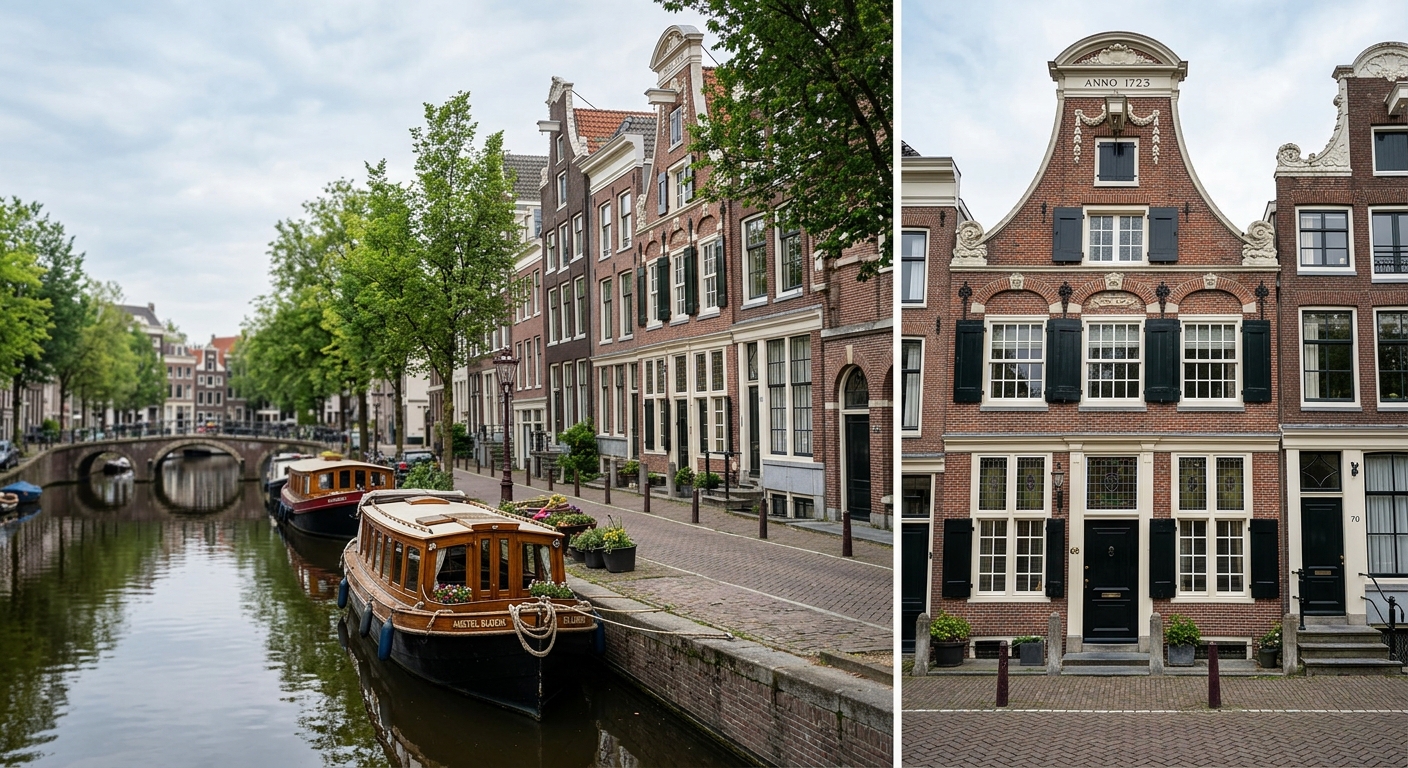
Many canal houses and pre-war buildings have foundation or “funderingsherstel” (foundation repair) issues. A structural survey (bouwkundige keuring) costing €400-€800 can reveal problems that save buyers tens of thousands of euros in future repairs—or give leverage to renegotiate.
Financing as a Non-Resident
One of the biggest surprises for expats: Dutch banks generally require a BSN (Burgerservicenummer), a local employment contract, and often a minimum residency or work permit status before approving a mortgage. Non-EU nationals without a permanent contract frequently need a larger down payment—sometimes 20-30% instead of the near-100% financing Dutch nationals can access.
Quick Scenario: Imagine you’re a software engineer relocating from Toronto with a one-year contract. A Dutch lender may hesitate to offer full financing without proof of contract renewal likelihood or a longer employment history in the Netherlands. Working with a mortgage broker (hypotheekadviseur) who specializes in expat cases can turn this uncertainty into a workable financing plan.
Case in point: Priya, an Indian national on a highly skilled migrant visa, secured a mortgage in 2026 by combining a 15% down payment with a lender specializing in expat mortgages (such as Expat Mortgages NL or Munt Hypotheken), despite having only 18 months of Dutch payslips.
Three Challenges Expats Underestimate
1. The Notary Isn’t Optional—Or Flexible
In the Netherlands, a civil-law notary (notaris) is mandatory for property transfers, and they act neutrally—not as your advocate. Expats sometimes assume the notary will “look out for them” the way a solicitor might elsewhere. Instead, bring your own independent legal advisor if you want someone actively protecting your interests during contract review.
2. Transfer Tax and Hidden Costs Add Up Fast
Budget for overdrachtsbelasting (transfer tax) at 2% for buyers purchasing a home to live in themselves (first-time buyers under 35 purchasing under roughly €525,000 may qualify for exemption in 2026). Add notary fees, valuation reports, and mortgage advisor fees, and buyers should reserve 4-6% of the purchase price for closing costs beyond the deposit.
3. The “Ontbindende Voorwaarden” Clause Matters
These are conditional clauses in the purchase agreement—typically for financing or structural inspection—that let buyers withdraw without penalty if conditions aren’t met. In competitive bidding, some buyers waive these clauses to appear more attractive to sellers. Financial advisors strongly caution against waiving the financing clause unless your mortgage approval is already airtight.
Choosing the Right Neighborhood
Amsterdam isn’t one market—it’s a patchwork of micro-markets with wildly different price points and character. Below is a snapshot comparing five popular expat-friendly areas in 2026.
| Neighborhood | Avg. Price/m² (2026) | Expat Density | Commute to Center | Vibe |
|---|---|---|---|---|
| De Pijp | €8,900 | High | 10 min | Trendy, buzzing markets |
| Amsterdam Zuid | €9,700 | Very High | 12 min | Upscale, family-friendly |
| Noord | €6,300 | Growing | 15 min (ferry) | Creative, up-and-coming |
| Westerpark | €7,800 | Moderate | 8 min | Relaxed, green spaces |
| Oud-West | €8,400 | High | 7 min | Chic, café culture |
Visualizing Expat Density by Neighborhood
Below is a simplified comparison of relative expat concentration across these five areas, based on municipal registration data trends.
Practical Roadmap Before You Sign Anything
- Get a BSN and open a Dutch bank account first. Without these, mortgage applications simply stall.
- Talk to an expat-specialized mortgage broker early—ideally before house hunting, so you know your real budget.
- Hire an independent buying agent (aankoopmakelaar). In a market this competitive, having someone who bids on your behalf and knows local tactics is often worth the 1-2% fee.
- Never skip the structural inspection, even under time pressure—especially for buildings older than 1970.
- Clarify your residency and tax status with a Dutch tax advisor, since the 30% ruling and mortgage interest deduction rules affect affordability differently depending on your visa category.
Pro Tip: The right preparation isn’t about finding a loophole—it’s about building a financing and legal foundation solid enough to move fast when the right property appears, because in Amsterdam, hesitation is the most expensive mistake you can make.
Frequently Asked Questions
Can non-EU citizens buy property in Amsterdam without a residence permit?
Yes, technically anyone can purchase real estate in the Netherlands regardless of nationality or residency status. However, securing a mortgage without a valid residence and work permit is extremely difficult, so most non-EU buyers either pay cash or wait until their permit is confirmed.
How long does the buying process typically take in 2026?
From first viewing to receiving keys, expect roughly 8-14 weeks. This includes bidding, signing the preliminary purchase agreement, arranging financing, completing inspections, and finalizing the transfer with the notary.
Is it cheaper to rent first and buy later as an expat?
It depends on your visa stability and how long you plan to stay. Renting first (typically €1,800-€2,600/month for a one-bedroom in central areas) gives you time to understand neighborhoods and secure financing, but rising prices mean waiting too long can push your target property further out of reach.
Your Roadmap Forward
Amsterdam’s property market in 2026 rewards buyers who combine emotional patience with financial precision. As remote work policies shift and more multinational employers relocate staff to the city, competition for well-located apartments is unlikely to ease significantly in the next few years—making early preparation more valuable than ever.
If you’re serious about relocating, start building your BSN, bank account, and mortgage pre-approval now, even before you’ve chosen a neighborhood. The buyers who move confidently—not the ones who wait for certainty—are the ones who end up with keys in hand. So, what’s your first step going to be this week?